Showing posts with label beginning of the year. Show all posts

Saturday, July 7, 2018

Planning for the First Week and Beyond

     In my last post, I wrote about some things to think about when planning for your year.  In this post, I want to talk about how I actually go about implementing all of this.

     When I first started teaching, I used to spend the first day of class going over the syllabus.  At some point I realized how overwhelming (and boring!) that must be for students if every teacher is doing this on day one.  I also enjoy doing activities that help me learn about my students (and their names!) on the first day.  For the next couple of years, I started going over the syllabus on the second day of school so I could spend the first day learning about the kids.  Finally, I realized that there is never a good day to "go over the syllabus" for an entire class period.  I mean, let's be honest.....as an adult, am I able to sit and listen to someone talk about important rules and procedures for 45 straight minutes and actually absorb this information?  No!  So that is definitely not an effective way to go over the very important procedures that I really need for my students to know to have a smoothly running classroom for the rest of the year.


     My current system involves prioritizing my rules and procedures, as well as waiting until they are relevant to teach them.  Instead of teaching them all at once, I teach a few of a day for the first few weeks of school.  I am very strategic and careful about how I teach the rules. As I mentioned in the last post, I start with a list of all of my planned rules and proceduress for the year in a Google Doc.  As I am planning out my first week of school, I start looking over my procedures and prioritizing them.   
  • What procedures are the most important to me?  
  • What procedures will help my classroom be organized and allow for maximum learning?  
  • What activities can I plan to give me a good way to teach my expectations and procedures?
As I'm planning, I pick the most important procedures and find ways to incorporate them in to the first week of school.  

      For me, the very first procedures that I teach are my expectations for the beginning and end of class. I feel this sends a good message to students about the value of class time by showing them exactly what is expected at the beginning of class so we can get started right away each day.  It is also important to me from the very beginning that students know that I expect us to be busy until the end of class (especially because I expect students to wait for my signal to be dismissed rather than the bell).  Another expectation that I teach right away is the supplies that I expect students to bring to class.  Since these are the most important procedures to get my class running smoothly, these are the procedures that I teach on the second day of class.  

       Once I have chosen a couple of procedures to teach, it's time to plan for the rest of class.  At the beginning of the year there are always lots of things that I want to do:  introduce growth mindset, do some goal setting, have the students take an interest survey, and.....do some MATH!  After teaching a couple of basic procedures, I pick an activity that meets one of these other goals.  Often I am able to naturally incorporate a few other procedures or expectations to go with an activity.  For example, if I  an activity that requires students to pick up a supply at the beginning and be turned in when they are finished, then I have the perfect chance to talk about these procedures.  Or if my activity involves students sharing how they solved a problem, then I take the chance to introduce my classroom listening norms.    Teaching procedures when students need to know, rather than all at one time, them leads to better retention.  

       Each day for the first couple of weeks, I continue teaching a few norms, rules, expectations and procedures.  I also continue to reinforce the rules that I have already taught.  It helps students to hear expectations several times over the first few weeks. It is also important to give students feedback on how they are doing with meeting expectations over these first few weeks.  Now is the time to teach your students how to do things the way you want.  Remember, you're teaching students how you want things done for the rest of the year.  It's worth a few extra minutes now to consider the ideal way you want things done.  Let's look at something that will happen a lot: turning in papers.  In my classroom, I have an alphabetical file sorter that I use for turn in.  As I imagine this happening, here are some things that matter to me:

I love that the papers are easy to stack, and in alphabetical order when students turn them in!

  • I want all of the papers facing the same direction.
  • I want all of the papers placed all the way under the first letter of the student's last name.
  • I want students to be relatively quiet during the process.  
  • I want students to return to their seat as soon as their paper is turned in.
If these are the things that are important to me, then I make sure that I tell students these expectations before they turn in papers the first time.  As they turn in papers, I am closely evaluating how they are doing.  If I notice a problem, I point it out as something we can improve next time (or perhaps something that we need to try again right away).  I also note anything that is done exceptionally well.  I will make sure to reinforce these expectations the first several times we use this procedure.  Let's face it, if you don't take time to get things going smoothly now, what's it going to look like in April or May?!?!

      Throughout the first few weeks of school, I keep my list of procedures close by.  As I teach a procedure, I cross it off my list.  This list is always close by the first weeks of school.  I use it during class as I teach my procedures.  I use it as I plan, to keep track of what procedures still need to be taught.   It is a well-worn friend by the time I get all of the procedures crossed off!

      You can also use other activities in your classroom to teach some of your procedures.  Do you enjoy using stations for your classroom?  Then use stations as a way to teach some of your procedures!  As a bonus, you can use those stations to teach students your expectations for moving around the room when doing stations.  Enjoy using games for practice?  Plan a Jeopardy game using questions off of your syllabus  and teach your expectations for playing games.  Love the collaboration and fun of escape rooms?  Plan an easy puzzle based on your classroom rules and teach students about perseverance, collaboration and growth mindset!

     It takes a few weeks, but I feel like this way of teaching procedures, rules and expectations is much more effective than having a boring day of class to go over the syllabus when I overwhelm students with more information than they can possibly take in.   There is a day that I love every school year.  There comes a day, usually a few weeks into school that I realize I didn't have to teach a single procedure....just math, all day long.  That is one of my favorite days each year....and it always goes more smoothly because the students know how I want them to do things!

Friday, June 29, 2018

25 Questions For Planning Your Classroom Procedures

       I've always been a big believer in the power of planning and teaching classroom procedures.  I can still remember my first year when I thought that  I would just go over the rules on the first day and start teaching on the next day!  It only took me that first year to realize how much more goes into setting up your classroom in a way that works.  I spend time every single year setting up my classroom procedures.

      Usually, the first time I start to think about my classroom procedures is at the end of the year school....no, that's not a typo!  I said the end of the year.  I always start thinking about changes that I want to make for the following year in May.  The end of the year is the perfect time to begin the reflection process because that is when you know what is driving you crazy!  Some of that stuff is just the normal stuff that always drives you nuts at the end, but perhaps some of these pet peeves could be improved or fixed with different procedures.  Kids not coming to class prepared?  Maybe you need to rethink your beginning of class procedures.  Not happy with the time spent checking homework?  Perhaps revamping your homework procedures could help.  Usually in May I start a Google Doc that has a list of what needs to change for the next year.  At this point, I may not have all the solutions, but at least I know what procedures I need to think about and look for ideas over the summer.


       Once I'm ready to start planning, deciding my classroom procedures for the school year is always the first thing that I do to prepare.  Once I know the procedures I want to use, I can be more effective with things like classroom set up.  I can make sure that my classroom set up supports my procedures.  I can make sure that if I buy something, it will really be what I need for the year to come.

     When I'm planning out my procedures for the year, I always start with my list of things that I wanted to change.  Then I try to think through what a perfect class period would look like from bell to bell.  This vision is what drives my procedures.  I'm always thinking about how my classroom procedures can support my vision of what class should look like.   Personally, I like to be as specific as possible and plan as much as I can in advance.  In addition to the "regular" day (if there is such a thing in middle school!?!), I also try to plan out stuff that doesn't happen every day, but is still important.  For example, knowing how I want to handle study guides, tests and retakes is important in my planning.


Here are some of the things you will want to consider when planning for a new year:

  • What materials do you want students to have for class each day?
  • What are your expectations for students when the bell rings each day?
  • What do you plan for students to do each day for the first few minutes of class?
  • How do you plan to take attendance?
  • How will you manage student absences?
  • What materials are available for students to borrow?  
  • What will you do about students that don't have the necessary supplies for class (books, calculators, pencils, etc...)?
  • How are you going to handle student requests for drinks and bathroom breaks?
  • How do you want students to handle sharpening pencils and other tasks that might require them to get out of their seats?
  • How are you going to assign homework?  How will you grade it?
  • What is your grading policy going to be? Will you have categories (tests, quizzes, participation, etc...)?  What percent of the total grade will go to each category?
  • How will you get your student's attention when they are working?
  • What do you want students to do with graded papers?
  • How do you want students to organize notes and notebooks?
  • Where will students turn in papers?  
  • Who will return graded papers?
  • Will you have any classroom jobs that students can do for you?
  • Do you need to have any procedures in place for technology in your classroom?
  • How will you handle the end of class?  Do students need to wait to be dismissed, or can they leave then the bell rings?
  • What clean up procedures need to be in place for the end of class?
  • What will your retake policy be?
  • What will your late work policy be?
  • What is your policy for calculator use?  Use of other technology?
  • What other procedures are important in your classroom?  (Examples include effective group work, classroom discussions, how to respond to feedback, etc...)
  • Will you have some structure set up for challenging students or early finishers?
       Personally for me, I organize all of this into a Google Doc.  I find it easier to group them into categories, and then each year I can update and change easily.  Then I just change the date at the top, and I've got my procedures planned out for the year!  Then I'm ready to start on the rest of the tasks that need to get done before the new year begins.

Sunday, June 11, 2017

A Good Math Class Discussion: Part 2

    In my last post, I talked about my presentation norms that I use in my class.  Today, I'm going to address another important part of a class discussion:  listening.  For most kids, listening is a passive activity.  It is our job to teach them to be active listeners.  These are the strategies I use to teach my students to be active listeners in class.

1.  Listen carefully.  The first one is pretty obvious and speaks for itself.  If you're not paying attention, it's hard to hear what someone else has to say!

2.  Write down questions, comments or notes.  I think we all fall into the trap of thinking that we will remember what we want to say, what question we wanted to ask, etc.. when it is our turn to contribute.  The reality is that if we jot down notes to ourselves, we are far more likely to remember things.  Making sure that students always start with a piece of paper in front of them, even if it's just a scrap of paper or a post-it, is very important in making sure that students are active listeners.


3.  Be ready to summarize what the speaker said...    This requires a focused kind of listening.  This requires that students be more ACTIVE in their listening. As students try to do this, I think it also requires them to really think about whether or not they understand the explanation that is being give.  This leads to the second half of this expectation.

4. ......or ask the speaker a question.  It was really important to me that my classroom listening norms leave room for students to NOT understand.  I always want to send the message that it is OK to struggle and not understand, as long as you're still trying and working.  At the same time, I want students to know that not understanding doesn't mean that you don't participate.  This expectations gives students a way to stay active and involved even when they don't understand.
 
5.  Think about how your strategy compares.   I want a classroom that is open to many strategies.  By comparing strategies, students can see more clearly how strategies compare.  The more students get used to comparing strategies, the more likely they can start to pick the best strategy for the given problem.

A Good Math Class Discussion: Part 1

      Good discussion is so important in class, and it supports the standards for mathematical practice.  Yet, we all know that good discussions don't just happen by accident.  Over the years, I have learned that I need to spend time teaching my class how to have a good discussion so they can really get the most out of it.  In this post, I'm going to focus on the presentation norms that I use in my classroom.

1.  Speak loudly enough for everyone to hear.   This one is pretty obvious, and yet we all have students that seem to speak at a whisper.

2.  Speak at a reasonable pace.  Again, seems obvious, but I know that students really seem to struggle with this for a variety of reasons.  For one thing, when kids get excited, they often rush when they are talking!  Unfortunately, that can really get in the way of other people getting understanding what you're so excited to share with them.

math-practice-smp6-critique-reasoning

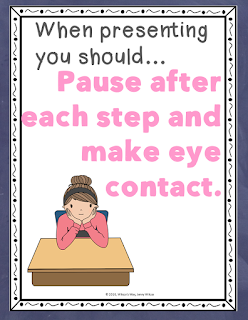
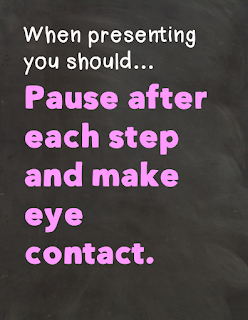
3.  Pause after each step and make eye contact.  This one goes hand in hand with speaking at a reasonable pace.  I can't tell you how many times I have had students completely lose everyone in the room (even me!) trying to explain their method.  I find that there are two common reasons why kids get lost during another student presentation.  One reason is that presenters give all of their steps at one time, and this puts everyone's brain on overload if they're still trying to process the second step, and the presenter is talking about the fifth step!  The other common reason that happens is that a student doesn't understand something early on, so they either stop understanding or stop listening.
         For these reasons, I teach kids that they need to pause after each step and make eye contact.  This way, the listeners have a chance to process what you're saying as you pause.  Hopefully, when you make eye contact it will be obvious if the people that you're talking to are lost!
       I also find that it is very important to tell my class that this helps everyone....including me.  I like having my students see that I also have to ask people to slow down, repeat a step, or answer a question to clarify their method.  I think it is so important to normalize the process of understanding, and that needing someone else to slow down does not make you "dumb".

4.  Ask for questions from the class.   This one closely follows the last one.  If you are pausing after each step, it is a natural time to let people ask questions.  Hopefully when you continue, there is a better chance for your audience to understand what you're saying now.  Also, if you have more chances for questions, there is a better chance more people will understand by the end.

5.  Show visuals.  This can help for different kinds of learners.  It is also helpful to have it as a reference throughout the presentation.

At the beginning of the year, we spend time talking about and practicing these norms.  In my next post, I'll look at the other side of the discussion:  listening norms.


Sunday, August 7, 2016

Teaching Procedures and Classroom Climate...a Good Investment

Trying to teach growth mindset, and the power of mistakes!
      I started planning for the first week of school yesterday.   I've been out to school several times to get my classroom ready, but now it's not general stuff....it's actual lesson plans.
My favorite wall at school...my Cap wall!
   
I'm always amazed when I plan the first week (ok, honestly the first 2 or 3 weeks) how little content I can plan for.  I always have high hopes, but reality has taught me that the first week or two will be mostly procedures and classroom climate.  And it is always an investment that I'm glad I made.

     So as I planned the two or three short math activities that I hope to get done, what I mostly was thinking about was what procedures and classroom habits I want to use them to teach.  I have a couple of new things I want to implement this year to strengthen classroom discussions.  One is a set of classroom presentation norms, and another is a set of question stems.

     The presentation norms is something that has been in the back of my mind for a while now.  Clear cut expectations for what it should look and sound like when kids are talking in my room.  I started the simplest of these last year....pause after every sentence to give your audience a chance to process.  So this summer, I really started thinking about what would a good presentation look like.  This is what I've come up with that I plan to start teaching the first week.

1.  Speak loud enough for everyone to hear.     I know this seems really obvious, but often norms start with the obvious.

2.  Show visuals.           I think this will help everyone.  I think it will help the speaker stay focused and not lose their train of thought.  I also think it will help the audience a ton.

3.  Pause after each step and make eye contact.       This one I started last year, and even this one thing made a huge difference.  So many students are in such a hurry to be done talking, they rush through a really great explanation so fast that even I get lost.  I realized that if I was going to let kids rush through a presentation without giving other students a chance to think about what they're saying, why was I even bothering with student presentations.  So this one is huge for me.

4.  Ask for questions from the class.           I think this one is a natural follow up to the last one....because if the class really has time to consider the steps, then I think the questions will follow.  And I'm hoping they will be really good questions.

 Math Presentation Norms
Math Presentation Norm Posters

And this leads me to the next thing I'm excited to try out this year.  Question cards.  I am going to keep sets of these in the envelope of supplies at my tables.  I think if the kids have access to these while other kids are presenting, some really good questions and discussions will follow.  I have the questions divided down into different kinds: questions to clarify, questions of wonder, statements to agree, or statement to disagree.  I like that students will really have to think about where they are at with the student presentation (Do I agree?  Do I need clarification?) by using these cards.
Math Questioning Norm Posters


Here's to the math that we will accomplish the first week of school....and so much more!